Varicose Veins Treatment
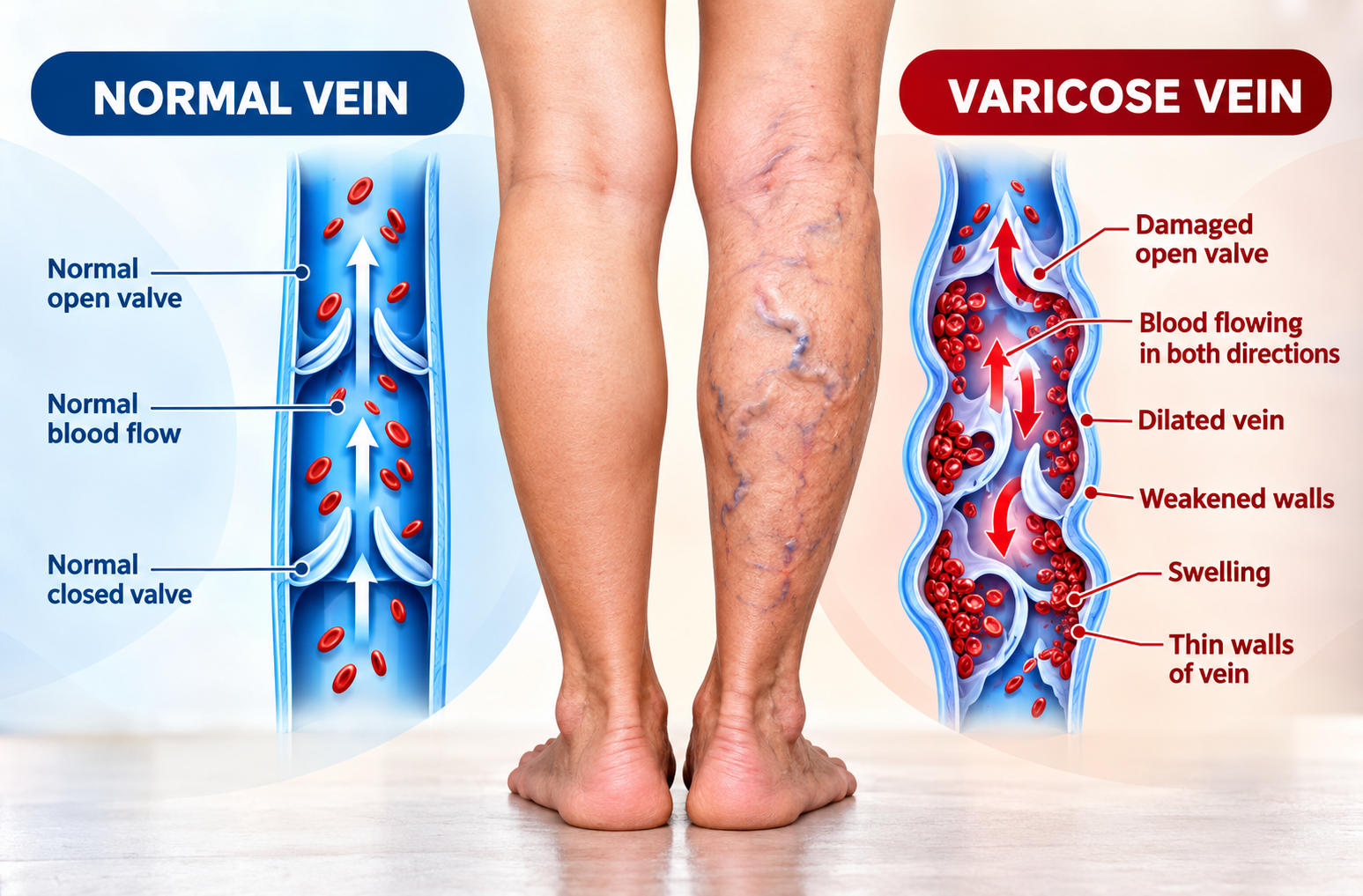
Varicose veins are enlarged, twisted veins that commonly
develop in the legs when the valves inside the veins do not
work properly. This can cause blood to pool in the veins,
leading to visible bulging veins, heaviness, aching, swelling
and discomfort in the legs. Early evaluation can help identify
the underlying venous problem and prevent symptoms from
becoming more severe.
Dr. Rahul Singh provides specialized vascular evaluation and
treatment for varicose veins, focusing on accurate diagnosis,
symptom relief and appropriate treatment based on the
individual patient's condition. Treatment may range from
lifestyle and conservative measures to minimally invasive
procedures when required.
Specialized Care for Varicose Veins
Effective varicose vein care begins with understanding the
cause and severity of the venous problem. A detailed
clinical evaluation and appropriate vascular assessment
can help determine the most suitable treatment approach.
Our goal is to provide personalized care that improves
comfort, mobility and overall vascular health.
Early evaluation of varicose veins can help manage
symptoms, improve leg comfort and reduce the risk of
complications.
Frequently Asked Questions
Learn more about varicose veins, their symptoms, evaluation
and available treatment options. If you are experiencing
persistent leg pain, swelling or prominent veins, a vascular
consultation can help determine the appropriate next step.
-
What are varicose veins?
Varicose veins are enlarged and twisted veins,
usually visible beneath the skin of the legs. They
commonly develop when the valves inside the veins
become weak or do not function properly, allowing
blood to collect in the veins.
-
What are the common symptoms of varicose veins?
Common symptoms may include visible enlarged veins,
aching or heaviness in the legs, swelling around the
ankles, discomfort after prolonged standing, itching
and tiredness in the legs. Some people may have
varicose veins without significant symptoms.
-
When should I see a vascular surgeon for varicose veins?
A vascular consultation is recommended when varicose
veins are associated with persistent pain, swelling,
skin changes, recurrent symptoms or difficulty with
daily activities. Early assessment can help
determine whether observation, conservative care or
a procedure may be appropriate.
-
What treatments are available for varicose veins?
Treatment depends on the underlying vein problem,
symptoms and overall health. Depending on the
diagnosis, management may include lifestyle
measures, compression therapy, medication for
associated symptoms or minimally invasive and
surgical procedures when clinically indicated. The
appropriate treatment is decided after a vascular
evaluation.