Aortic Aneurysm Surgery
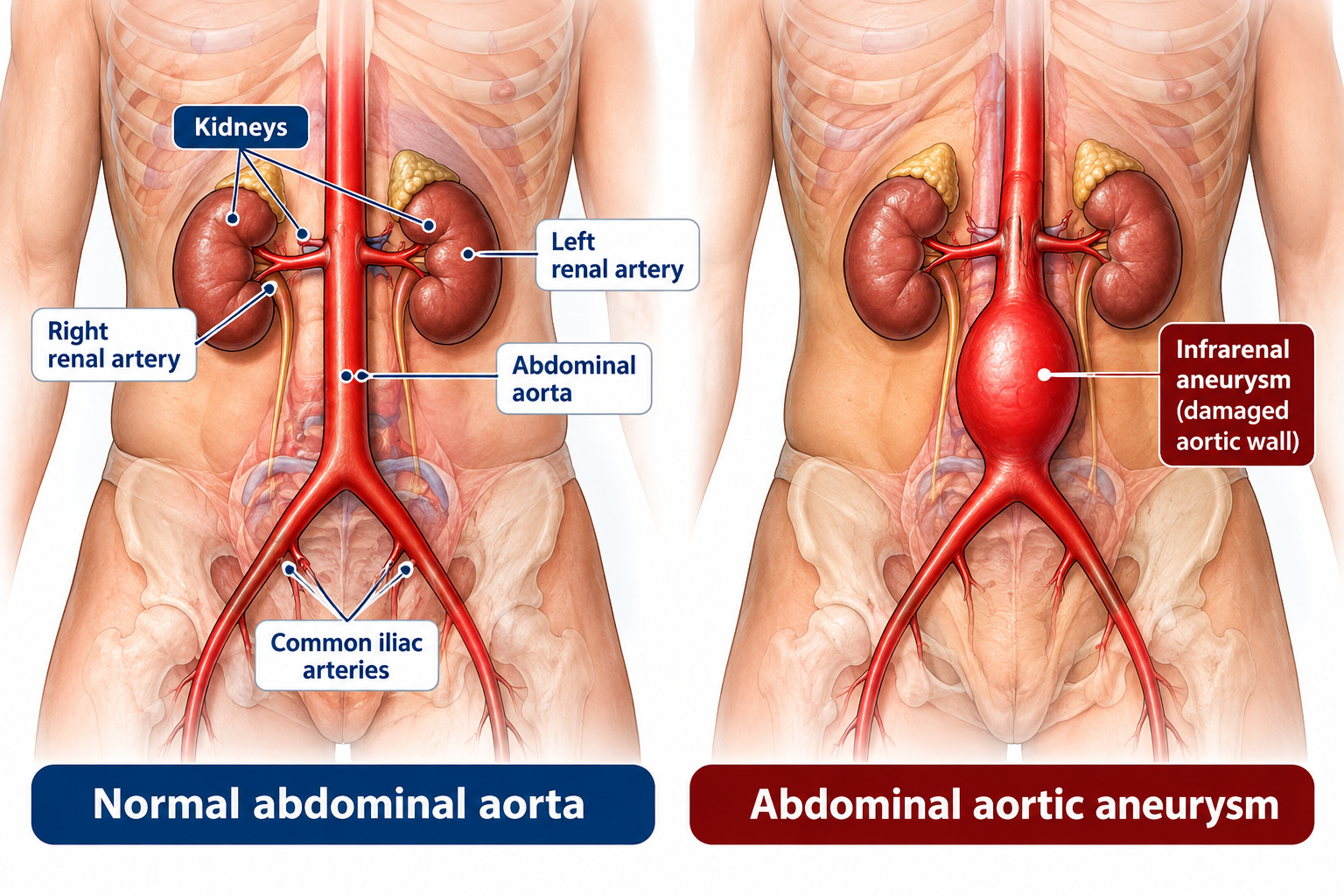
An aortic aneurysm is an abnormal enlargement or bulging of
the aorta, the body's largest artery. An aneurysm can develop
in different parts of the aorta and may remain without
symptoms for some time. If an aneurysm becomes significantly
enlarged or develops complications, specialist vascular
evaluation and treatment may be required.
Dr. Rahul Singh provides specialized vascular assessment and
surgical care for patients with aortic aneurysms. Evaluation
focuses on the location, size and characteristics of the
aneurysm, the patient's symptoms and overall health to
determine the most appropriate management approach.
Specialized Aortic Aneurysm Care
Management of an aortic aneurysm depends on its location,
size, growth, symptoms and the individual patient's risk
factors. Some aneurysms may be monitored with regular
imaging and medical management, while others may require
an intervention. When treatment is indicated, the
appropriate surgical or endovascular approach is selected
after detailed vascular assessment.
Early detection and regular vascular assessment can help
identify aortic aneurysms and determine when specialist
treatment may be required.
Frequently Asked Questions
Aortic aneurysms may develop without obvious symptoms, which
is why appropriate evaluation and follow-up can be important
for patients at increased risk. Understanding the condition
and recognizing urgent warning signs can help patients seek
timely medical attention.
-
What is an aortic aneurysm?
An aortic aneurysm is an abnormal enlargement or
bulging of a section of the aorta. It can occur in
different parts of the aorta and may grow over time.
The risk associated with an aneurysm depends on
factors such as its location, size and growth.
-
What are the symptoms of an aortic aneurysm?
Many aortic aneurysms do not cause noticeable
symptoms. When symptoms occur, they may include
persistent pain in the abdomen, chest or back
depending on the location of the aneurysm. Sudden
severe pain, weakness, fainting or other acute
symptoms may indicate a serious complication and
require emergency medical attention.
-
Who is at risk of developing an aortic aneurysm?
Risk factors can include increasing age, smoking,
high blood pressure, atherosclerosis, certain
inherited conditions and a family history of
aneurysm. Individual risk depends on multiple
factors and should be assessed by a qualified
healthcare professional.
-
When is surgery required for an aortic aneurysm?
The need for treatment depends on factors such as
the aneurysm's size, location, growth rate, symptoms
and overall risk of complications. Some aneurysms
can be monitored with regular imaging and medical
management, while others may require surgical or
endovascular treatment. The appropriate approach is
determined after specialist vascular evaluation.