Peripheral Artery Disease
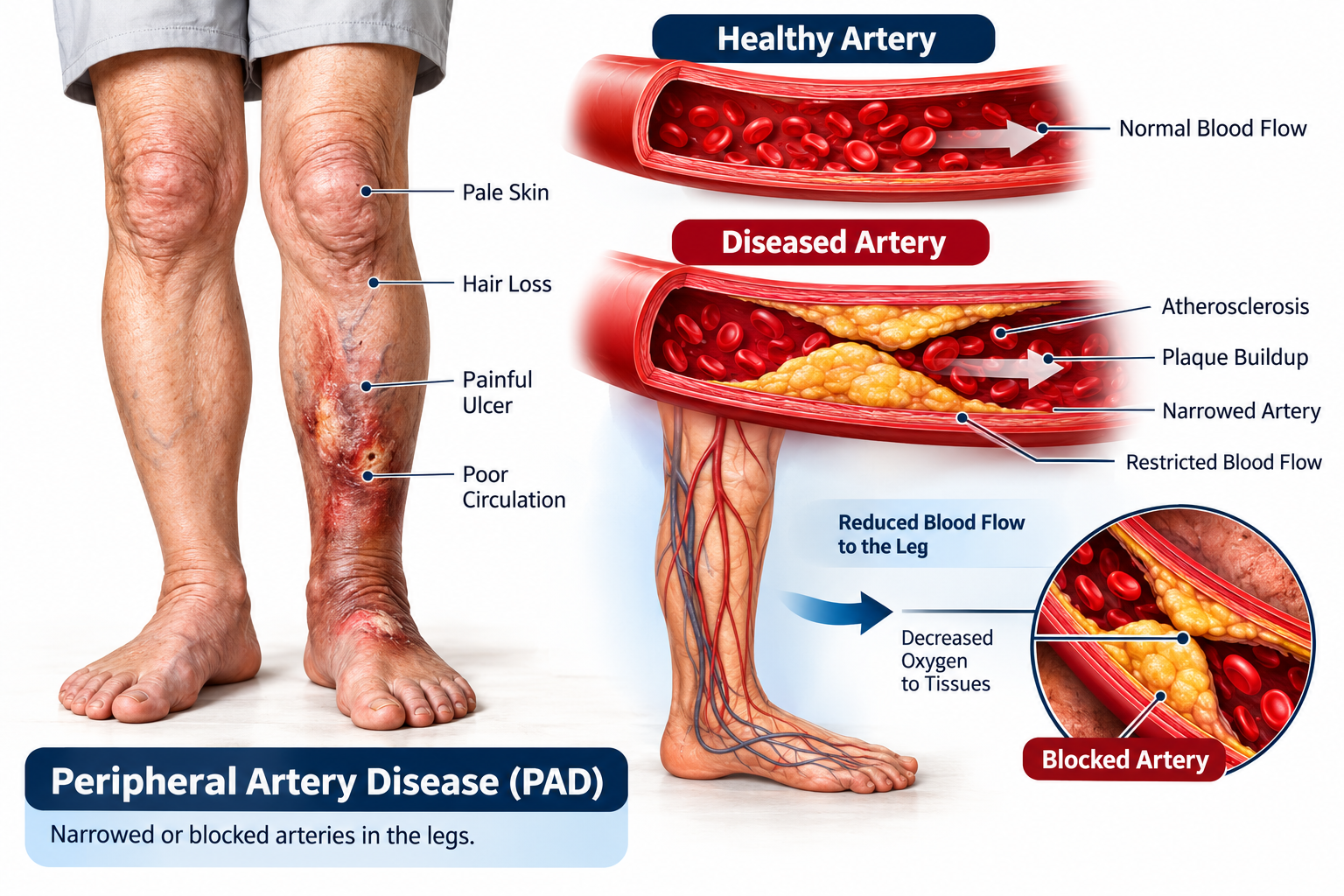
Peripheral Artery Disease (PAD) is a condition in which the
arteries supplying blood to the legs and feet become narrowed
or blocked. Reduced blood flow can cause leg pain during
walking, tiredness, cold feet, changes in skin colour and, in
more advanced cases, wounds that are slow to heal.
Dr. Rahul Singh provides specialized vascular evaluation and
treatment for Peripheral Artery Disease, with a focus on
assessing blood circulation, identifying the severity and
location of arterial narrowing and developing an appropriate
treatment plan. Early evaluation can help manage symptoms and
reduce the risk of serious complications.
Comprehensive Care for Peripheral Artery Disease
PAD requires careful assessment of arterial blood flow and
the patient's symptoms and risk factors. Depending on the
condition, management may include lifestyle changes,
medication, supervised exercise, vascular procedures or
surgery when clinically appropriate. Treatment is selected
according to the individual's vascular condition and
overall health.
Early diagnosis and appropriate management of Peripheral
Artery Disease can help improve circulation, mobility and
overall vascular health.
Frequently Asked Questions
Peripheral Artery Disease can develop gradually and some
people may initially have few or no symptoms. Understanding
the warning signs and seeking vascular evaluation when
symptoms occur can help identify circulation problems and
guide appropriate care.
-
What is Peripheral Artery Disease?
Peripheral Artery Disease is a condition in which
the arteries that carry blood to the legs and feet
become narrowed or blocked. This can reduce blood
flow to the muscles and tissues of the lower limbs
and may cause walking-related pain or other
circulation problems.
-
What are the symptoms of Peripheral Artery Disease?
Common symptoms may include pain or cramping in the
leg while walking that improves with rest, leg
weakness, numbness, cold feet, changes in skin
colour and slow- healing wounds. Some people may
have PAD without obvious symptoms.
-
Who is at risk of developing Peripheral Artery Disease?
The risk of PAD increases with factors such as
smoking, diabetes, high blood pressure, high
cholesterol and increasing age. People with other
cardiovascular conditions may also have a higher
risk of developing peripheral artery disease.
-
How is Peripheral Artery Disease treated?
Treatment depends on the severity of the disease,
the location of arterial narrowing and the patient's
overall health. Management may include lifestyle
changes, medicines and exercise therapy. When blood
flow is significantly reduced, vascular procedures
or surgery may be considered based on the clinical
evaluation.