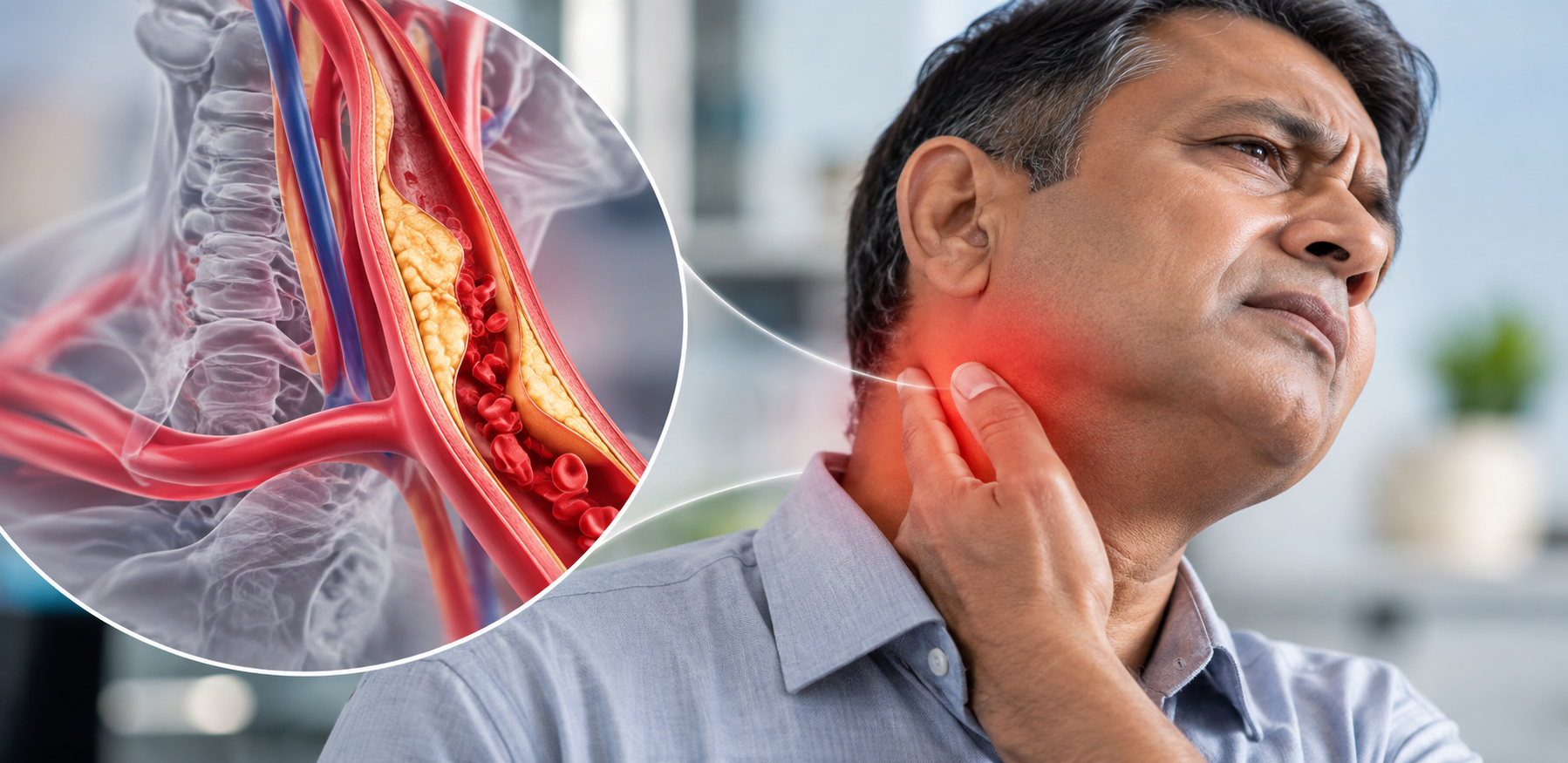
Carotid Artery Disease
Carotid artery disease occurs when the arteries on either side
of the neck become narrowed or blocked, commonly because of
plaque buildup inside the artery. These arteries supply blood
to the brain, and significant narrowing can reduce blood flow
and increase the risk of a transient ischemic attack or
stroke.
Dr. Rahul Singh provides specialized vascular evaluation and
management for patients with carotid artery disease.
Assessment focuses on understanding the degree of narrowing,
identifying relevant risk factors and determining an
appropriate treatment strategy to help reduce the risk of
serious cerebrovascular complications.
Specialized Care for Carotid Artery Disease
Carotid artery disease may develop gradually and may not
cause noticeable symptoms until a significant vascular
event occurs. Careful clinical evaluation and appropriate
vascular imaging can help identify narrowing and guide
management. Depending on the severity and individual
circumstances, treatment may include risk-factor
management, medicines or a vascular procedure when
clinically indicated.
Early detection and appropriate management of carotid
artery disease can play an important role in protecting
brain circulation and reducing stroke risk.
Frequently Asked Questions
Carotid artery disease can sometimes remain silent, making
vascular assessment important for people with relevant
symptoms or risk factors. Understanding the warning signs
and obtaining timely medical evaluation can help guide
appropriate care.
-
What is carotid artery disease?
Carotid artery disease occurs when plaque or other
changes cause narrowing or blockage of the carotid
arteries, which supply blood to the brain.
Significant narrowing can increase the risk of
reduced blood flow to the brain and stroke.
-
What are the warning signs of carotid artery disease?
Carotid artery disease may have no symptoms. When
reduced blood flow affects the brain, warning signs
can include sudden weakness or numbness, difficulty
speaking, confusion, vision changes or problems with
balance. Sudden neurological symptoms require urgent
medical attention.
-
How is carotid artery disease diagnosed?
Diagnosis begins with a medical and vascular
assessment. Depending on the patient's condition,
tests such as carotid Doppler ultrasound and other
vascular imaging may be used to evaluate blood flow
and determine the degree and location of arterial
narrowing.
-
How is carotid artery disease treated?
Treatment depends on the severity of carotid
narrowing, symptoms, overall health and other risk
factors. Management may include lifestyle changes,
medicines and regular monitoring. In selected
patients with significant disease, a vascular
procedure or surgery may be considered following
specialist evaluation.